
Being a Patient - Patient
By: Coach Hughes
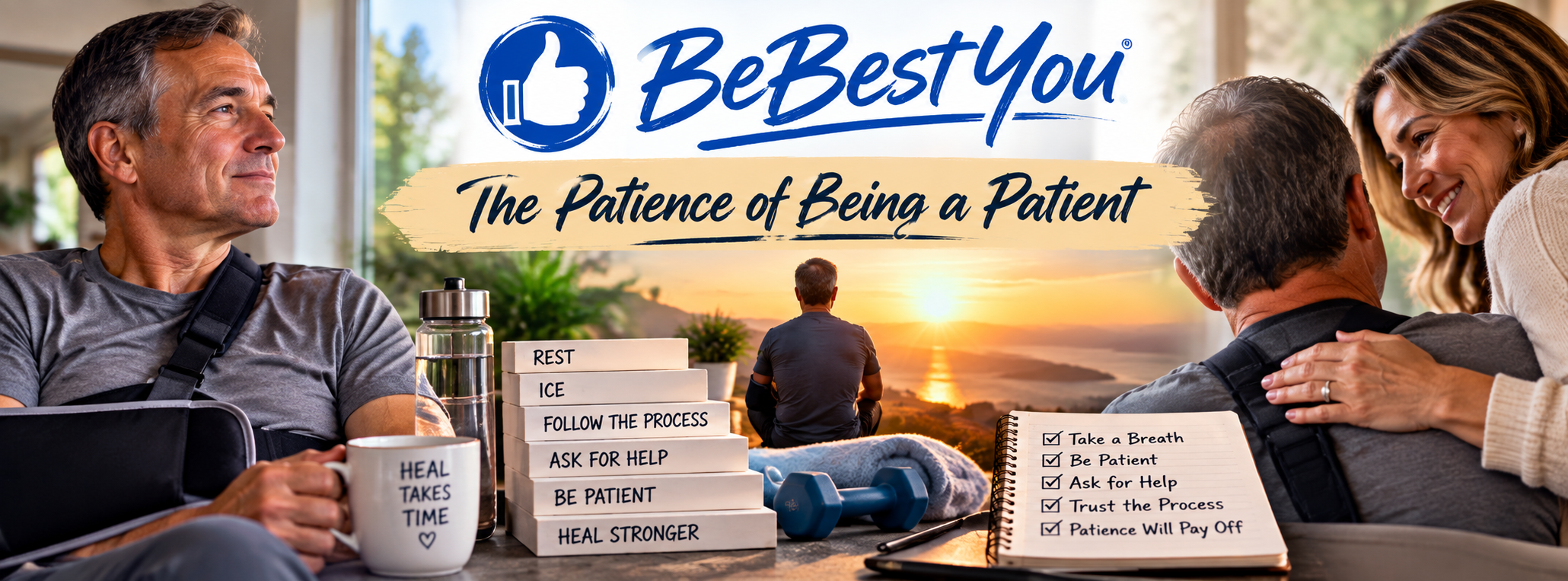
The Pain of Injury and the Pain of Recovery
We’ve all experienced injuries and the pain that comes with them. Some injuries heal with time, rest, and ice. Others require a much longer road back, sometimes involving physical therapy or major surgery like a hip, knee, or shoulder replacement or repair. Whatever the injury, there is the pain of getting hurt—and then there is another kind of pain that comes with getting better.
I don’t think anyone looks forward to either one. But having gone through quite a few injuries and surgeries myself, I’ve learned that these experiences can teach you a lot about who you are. As I usually try to do, I’ve reflected on this latest experience and asked myself: What can I learn from it that will help me moving forward? This time, one lesson keeps coming back to me:
Sometimes the hardest part of being a patient is learning to be patient.
Learning to Be a Patient Patient
My hip and knee surgeries taught me one version of recovery. With hips and knees, they want you up and moving almost immediately. You may be walking the day of surgery or the next morning, and physical therapy starts pretty quickly. It hurts, but at least you feel like you are doing something. There is movement. There is progress. My shoulder has been completely different.
With shoulder surgery, especially early in recovery, progress can mean not moving. You have to protect the repair and give the tendons, muscles, and surrounding tissue time to heal before you can really begin the work of getting stronger again. That sounds simple. Just don't move it. It isn't.
In some ways, the greatest pain hasn’t been physical. It has been the pain of patience.
Wearing a sling almost 24/7 is uncomfortable. Being right-handed and suddenly not being able to use my right arm normally makes the simplest things frustrating. Brushing your teeth, getting dressed, buttoning a shirt, opening something, doing chores—things you normally do without thinking suddenly require thought, help, or a completely different approach.
Then there is the constant soreness and swelling. It may not be severe pain, but it is always there, reminding you that something isn't normal yet. You have to remind yourself that it will get better. You have to ice it. You have to follow the process. And most importantly, you have to give it time…And then there is sleep.

Anyone who has been through shoulder surgery would concur when I mention that one. Sleeping can become one of the biggest challenges of recovery. And if you've ever gone through a stretch without enough sleep, you know that one of the first things we tend to lose is our patience.
Lack of sleep leads to frustration. Frustration leads to impatience. And impatience can cause you to do exactly what you shouldn't do—push too hard, move too quickly, or convince yourself that you're ready for something before your body actually is.
We Need People Who Nudge Us
I've learned that when I start heading down that slippery slope of impatience, I have to recognize it and center myself. Sometimes that means simply taking a breath. Other times, it means listening to the people around me who are trying to nudge me in the right direction. And I emphasize nudge, not nag. There is a difference.
I couldn't have gotten through my recoveries without incredible support. One of the things that support has taught me is that patience isn't only required from the person recovering. It is also required from the people taking care of them.
There has certainly been some frustration along the way. Maybe even a little moaning and groaning—at least I'm calling it a little. My friends and family may have a different description.
But through my knee surgery six years ago, my hips, and now my shoulder, my wife has been there every step of the way. She has supported me through things she shouldn't have had to deal with, without complaining and, I hope, without ever feeling unappreciated. Sometimes the greatest form of support isn't doing something for someone. It's patiently reminding them, out of love, to do what they already know they need to do.
That has also reminded me of something else: being a good patient doesn't mean doing everything on your own.
Sometimes being a good patient means letting other people help you. That requires patience on your part—and patience on theirs.
Healing Takes Time
So much of recovery is mental and emotional. We want to get things done. We want to accomplish our goals quickly. We don't like feeling inconvenienced, dependent, slowed down, or unable to do what we normally do. When something takes longer than we want it to, that frustration begins chipping away at our patience.
I've learned a lot about myself again through this experience. There have been moments when I've been disappointed in how I've handled things, especially when I've allowed myself to slide mentally or emotionally into frustration. But I've also learned that whenever I find myself in one of those valleys, I can climb back out.
Sometimes I can do that myself. Sometimes I need someone else to help pull me out.
And maybe that's part of recovery too—learning when to trust the process and when to trust the people around you.
We live in a world where we want almost everything faster. We want results faster. We want problems solved faster. We want goals accomplished faster. But our bodies don't necessarily operate on our schedules. Healing takes time. And fighting that reality doesn't make healing happen faster. In fact, sometimes it does exactly the opposite. Healing takes time. When you're patient with the process, you give yourself the chance to heal. When you're impatient, you can make the process take even longer. That's the lesson I'm taking from this experience. It's certainly a lesson for me, but I think there is something in it for all of us.
When you catch yourself in those moments of pain, frustration, or impatience, recognize what's happening. Take a breath. Ask for help when you need it. Listen to the people who care enough to nudge you in the right direction.
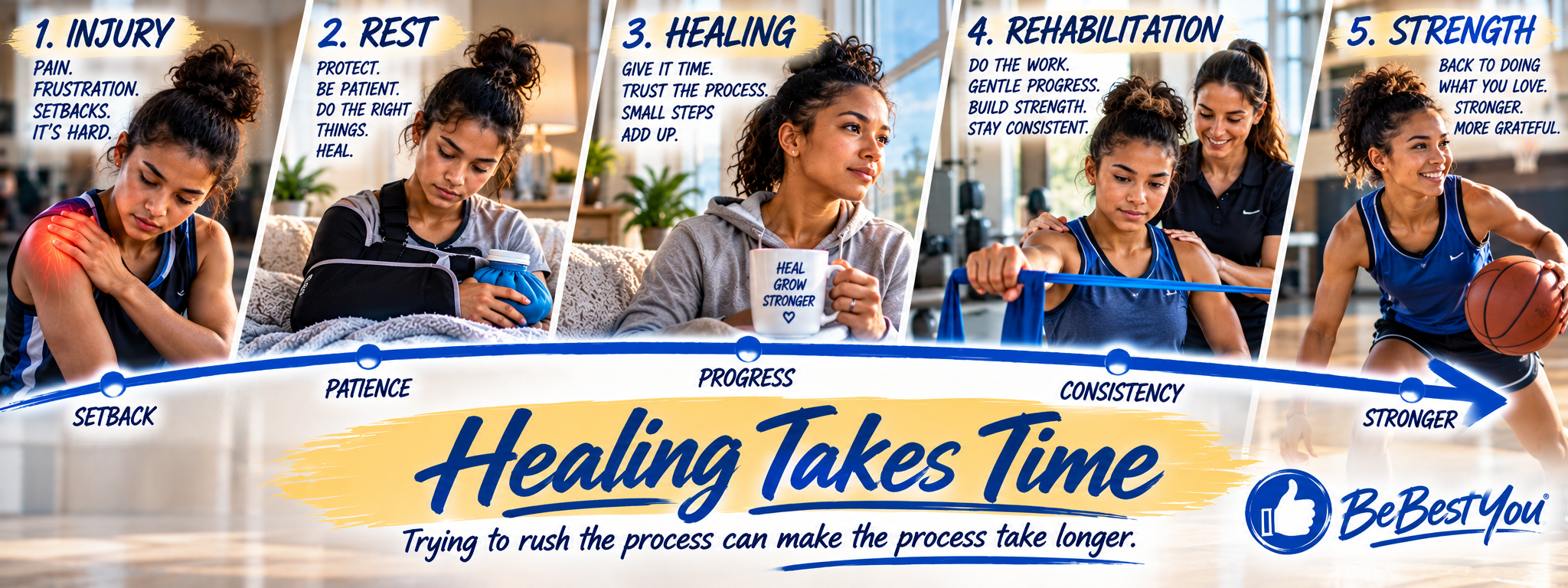
Healing Is A Process
And remember that progress doesn't always mean moving faster. Sometimes progress means having the patience to wait. Patience will pay off.