
A Tomato Story
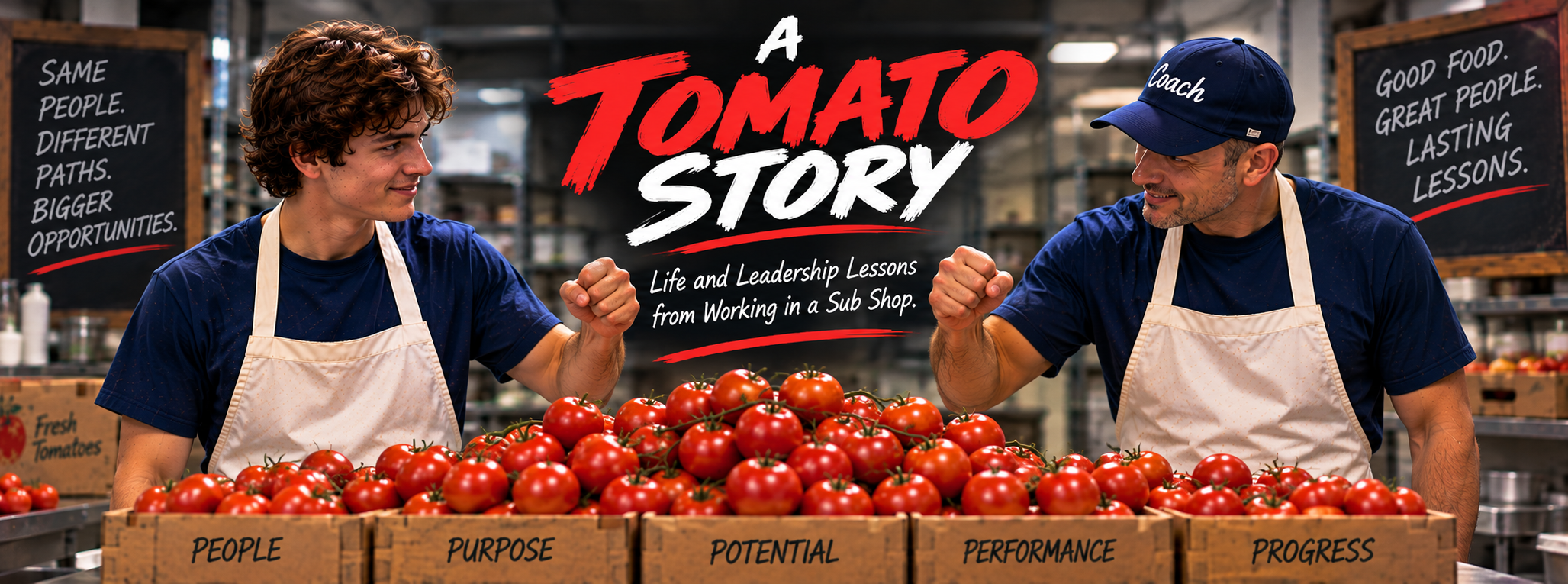
Life and Leadership Lessons from Working in a Sub Shop
Some of the best coaches I’ve had in my life weren’t people I met on an athletic field, in a classroom, or at a leadership seminar. One of my most influential coaches was someone I worked for when I was 19 years old. At the time, I didn’t even realize he was coaching me. I thought I just had a job.
I was working in a little thousand-square-foot sub shop in New Jersey. It wasn’t fancy. It was small, busy, crowded, and during the rush, everybody had to know exactly what they were doing. We could go through roughly a thousand loaves of bread in a day, and the majority of what we sold were cold subs. The toppings were simple: onions, lettuce, tomatoes, vinegar, oil, oregano, and salt. Which meant we went through a lot of tomatoes.
A whole sub got five slices of tomato and a half got three. Each tomato might give us around eight usable slices, and a case might contain roughly 56 tomatoes. Because the store was so small, we couldn’t bring in a week’s worth of tomatoes at once. Deliveries came three, four, sometimes five times a week. But no matter how many tomatoes came through that back door, there was one standard that never changed: every tomato we served had to be right. Not close. Not “good enough.” Right.
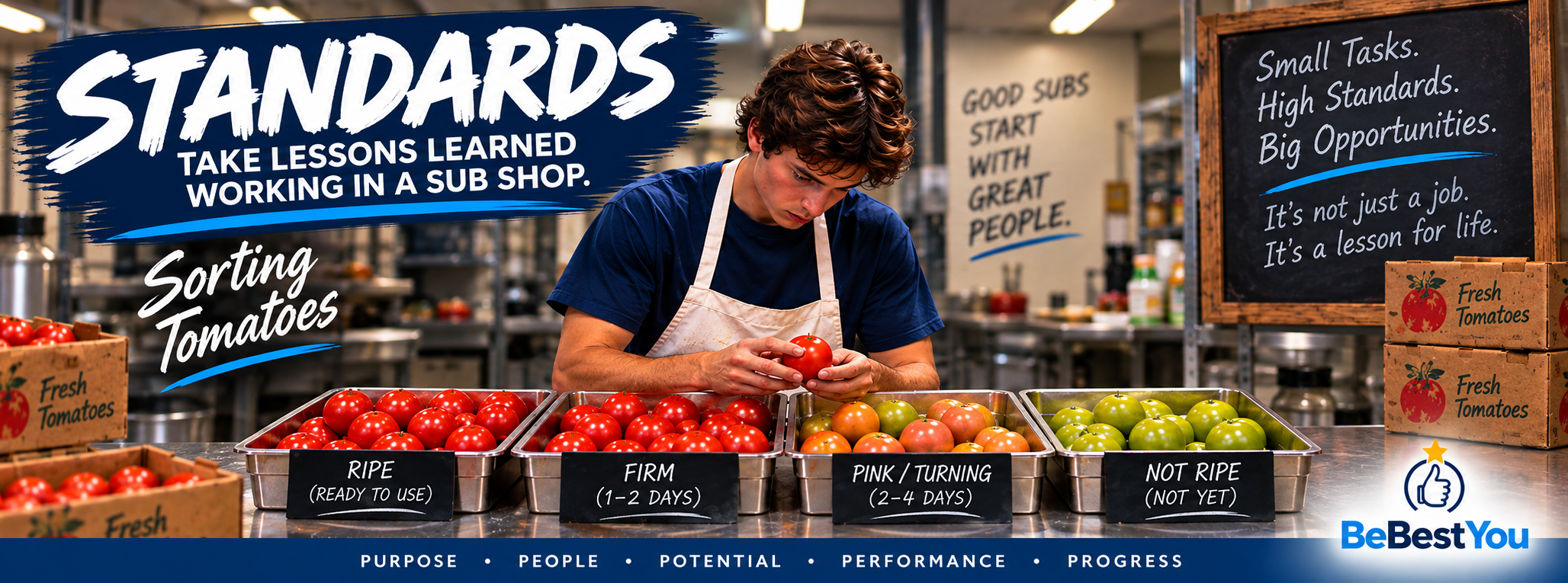
Every case had to be opened and sorted. We looked at the color, felt the texture, and judged the ripeness. A red, softer tomato needed to go into the cooler because it was ready to be used. A red but firm tomato might need another day or two at room temperature. A harder, greenish-pink tomato might need several days. And if a tomato arrived green and wasn’t going to become what we needed, it went back to the supplier.
It sounds simple. It’s just sorting tomatoes, right? Not in that shop. Sorting tomatoes was considered an important responsibility, and not everyone was allowed to do it. You earned the opportunity. The person opening the store the following morning needed to know that if a case of tomatoes was sitting in the walk-in cooler, every tomato in that case was ready to slice and serve. Nobody should have to check your work. They needed to be able to trust it. That was the standard.
Standards
Eventually, my coach decided I was ready. I don’t remember the exact day, but I remember the moment. We were in this tiny back room surrounded by cases of tomatoes. There was a large white food-prep bin in the middle, a couple of empty tomato boxes, an upside-down milk crate, and an upside-down pickle barrel. My coach sat on the pickle barrel, and I sat on the milk crate.
He looked at me and said, “Hughes, are you ready?” I answered, “Absolutely.” He looked back at me and said, “We’ll see about that.” My mouth immediately got a little dry. He picked up a tomato, handed it to me, and asked, “Ripe or not ripe?” I looked at it and said, “Ripe.” He responded, “Wrong. Two days out.”
Now my mouth was really dry. He handed me another tomato and said, “Let’s try it again. Ripe or not ripe?” By this point, I was already inside my own head. “Ripe?” I answered. He looked at me and said, “Hughes, you can’t answer a question with a question.”
My heart started beating faster. If you were standing there watching this, you might have thought he was giving me a hard time. He wasn’t. He was coaching me. He was testing me. He was pushing me. He was making me uncomfortable enough that I had to think.
“Most importantly, although I didn’t understand it at the time, he was trying to figure out whether he could count on me.”
I’m competitive, so eventually something clicked. I remember basically talking to myself: You’ve got this. He handed me another tomato and asked, “Ripe or not ripe?” This time I slowed down. I looked at it. I felt it. “Not ready. Two days.” He looked at me and said, “Right.”
One word. That’s all it took. My breathing slowed down, my confidence started coming back, and I stopped worrying about getting the answer wrong and started concentrating on doing the job right. I locked in, and we started moving through the cases.
Breakthrough
Then, completely out of nowhere, he asked me a question about my dad. It caught me off guard. I had been so focused on sorting tomatoes that I hesitated. He looked at me and said, “Hughes, you can’t multitask?” Here we go again. Heart racing. Dry mouth. Probably sweating a little. But this time I understood what was happening. I answered his question while continuing to sort, and we kept moving.
A little while later, he asked me something about my mom. This time I didn’t hesitate. I answered him and kept sorting. Before long, we were flying through the cases. I joke today that we were practically headbutting tomatoes back and forth and rolling them off our fingertips. It became a dance. When we finally finished the last case, I walked out of that back room exhausted. Not physically, but mentally.
At the time, I thought I had learned how to sort tomatoes. It would take me another 15 or 20 years to understand what had actually happened. As I became more interested in leadership, coaching, mentoring, and developing people, I started looking back at the people who had influenced me. One day I realized something about that afternoon that I had completely missed when I was 19: my coach knew things about my family that I didn’t remember ever telling him. He knew about my dad. He knew about my mom. He knew things that mattered to me.
Somewhere along the way, he had paid attention. He had listened. He had asked questions. He had made the effort to learn about the young person working for him. He knew me better than I realized he knew me.
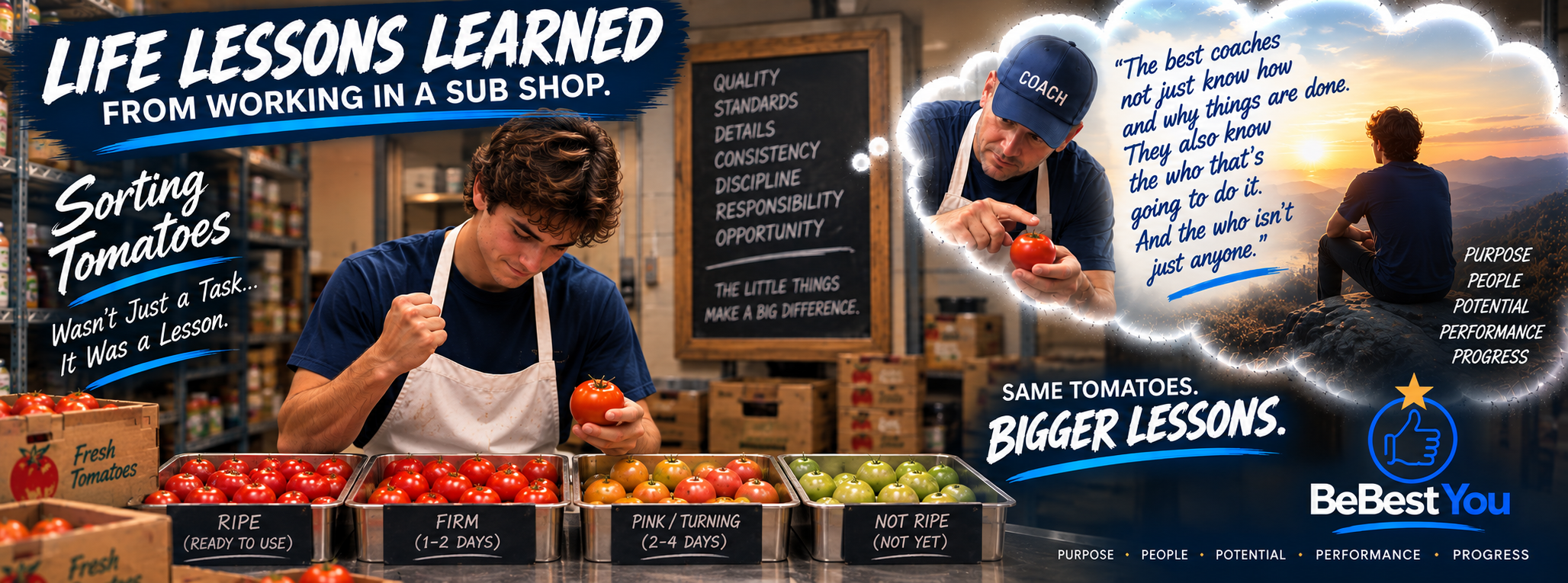
That’s when the tomato story became a leadership story for me. He wasn’t really teaching me how to sort tomatoes. He was teaching me standards, focus, attention to detail, accountability, responsibility, and confidence under pressure. He was teaching me what it meant to have someone trust your work without having to check it afterward. And without ever sitting me down and giving me a lecture about leadership, he taught me one of the most important lessons I’ve carried throughout my career: know your people.
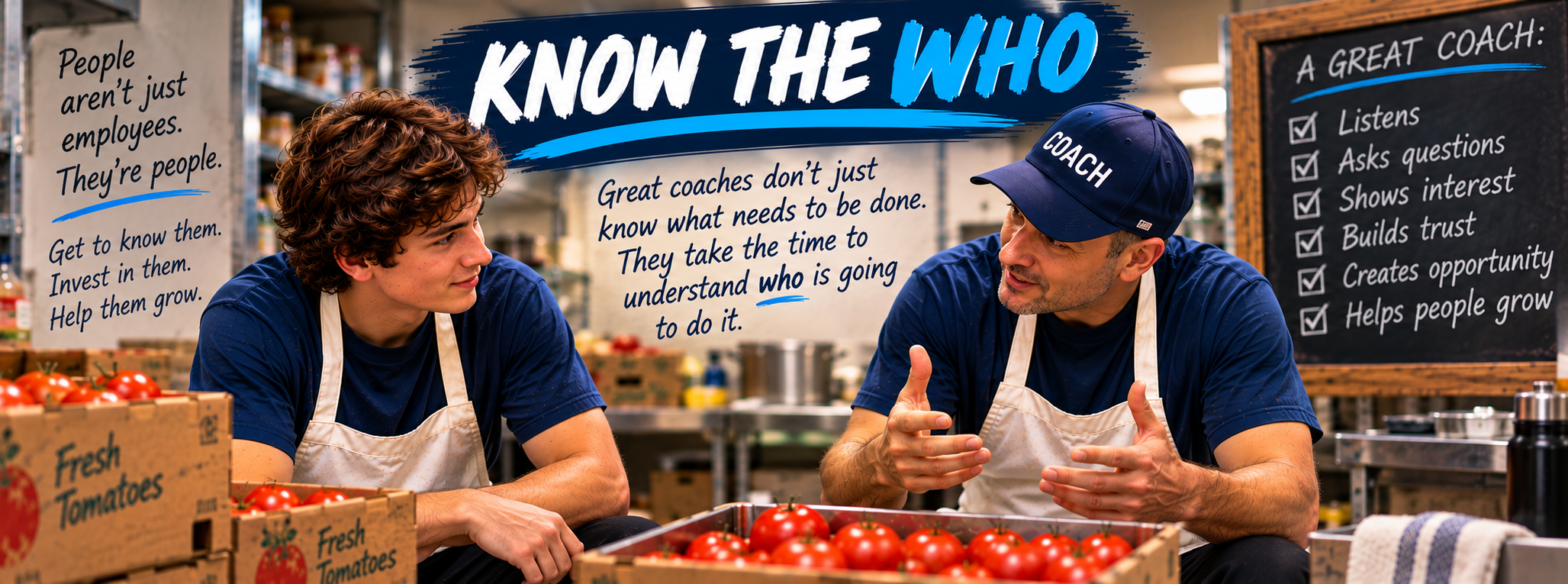
A great coach doesn’t just know what someone does. A great coach takes the time to understand who they are. The best coaches don’t just understand how something needs to be done or why it needs to be done. They understand who is going to do it. And the who isn’t just anyone.
Connections
There’s another part of this story that has become even more meaningful to me over the years. Whenever I tell it while teaching, if someone happens to be in the room who worked in that little shop during those years, you can sometimes see them become emotional. I understand why, because every one of us had our own tomato story.
It wasn’t necessarily tomatoes. Tomatoes happened to be mine. For someone else, it might have been learning to slice bread, working the grill, handling a lunch rush, cleaning the store, dealing with a customer, or being trusted with something for the first time. But almost everybody had a moment when somebody expected more from them than they were accustomed to expecting from themselves.
Years later, when you talk to people who worked there, they’ll tell you those lessons followed them. Some worked there for a summer. Some worked there for several summers. Others stayed for years. Heck, I stayed for more than 40. We all went in completely different directions in life. Some went into business. Some into finance. Some became teachers. Some entered medicine. One even became a heart surgeon. But many carried the same things with them: attention to detail, work ethic, accountability, pride, relationships, responsibility, and standards.
That’s why the memories can still become emotional. We’re not really remembering tomatoes. We’re remembering who we were becoming while we were sorting them.
That’s what great coaching can do. Sometimes a coach teaches you something directly. Other times, the lesson doesn’t reveal itself until years later. And sometimes the coach doesn’t even tell you they’re coaching you. They simply create a standard, get to know you, challenge you, make you uncomfortable, and give you another opportunity when you get it wrong. Then, when you finally get it right, they give you just enough affirmation to make you believe you can do it again.
“Right.” One word. But sometimes one word from the right coach at the right moment changes something inside you.
Years later, I would come to understand a progression I’ve used throughout my own coaching: make people Comfortable → they become more Coachable → Capable → Competent → and ultimately Confident. That day, sitting on an upside-down milk crate with a tomato in my hand, I was somewhere near the beginning of that journey. I just didn’t know it yet.
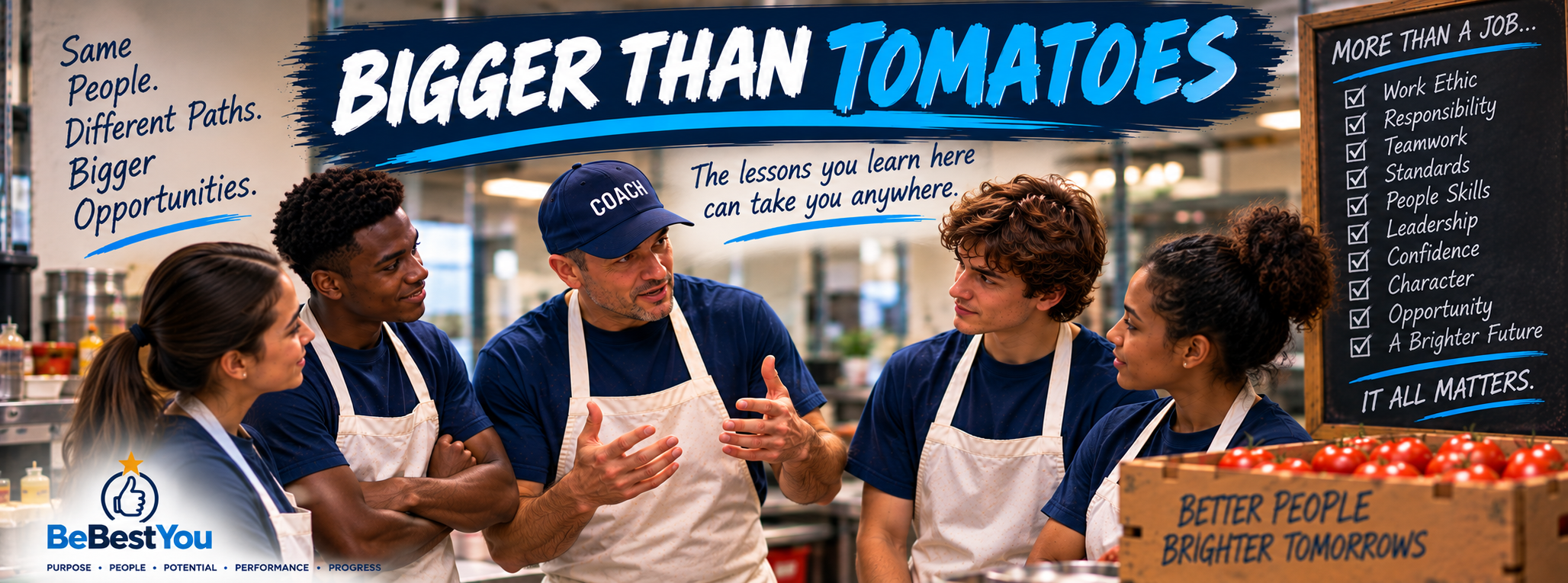
Culture
I thought I was learning how to sort tomatoes. I was learning how to lead. And maybe more importantly, I was learning what it felt like to have someone coach me.
That’s why I believe we should never—never—never underestimate the little things. Some of life’s greatest lessons don’t happen in classrooms, boardrooms, seminars, or leadership books. Sometimes they happen in a thousand-square-foot sub shop. You’re 19 years old, sitting on an upside-down milk crate with a tomato in your hand, and sitting across from you is someone you think is simply teaching you how to do your job.
It might take you 20 years to realize it.
They were helping you become who you were capable of becoming.

1. Standards Matter — Especially When No One Is Checking.
Doing something right shouldn’t depend on whether someone is watching. A true standard means the next person can trust that the job was done correctly without having to check your work.
2. The Littlest Details Matter.
A tomato may seem like a small detail, but thousands of small details ultimately determine the quality of the whole operation. Excellence is rarely one big thing. It is doing the little things right, over and over again.
3. Responsibility and Trust Are Earned.
Sorting tomatoes wasn’t given to everyone. You had to demonstrate that you could be trusted with the responsibility. The more consistently you prove you can be counted on, the more opportunities people are willing to give you.
4. Get Comfortable Being Uncomfortable.
Growth often begins when we’re pushed beyond what feels comfortable. A good coach challenges you, allows you to struggle, gives you another opportunity, and helps you discover that you’re capable of more than you thought.
5. Know Your People — The WHO Matters.
Great coaches don’t just understand what needs to be done, how to do it, and why it matters. They understand who they are coaching. They listen, pay attention, build relationships, and learn what matters to the person in front of them.
6. Never Underestimate the Little Things.
You may not recognize an important lesson while you’re living it. What seems like an ordinary task today may be developing your work ethic, confidence, character, and leadership for tomorrow. I thought I was learning how to sort tomatoes. I was learning how to lead.